
Rewilding Species of the Month: The Eurasian Beaver

Beavers are something of a poster child when it comes to rewilding. They are an incredible example of a keystone species, a species which shapes and holds together its natural environment to allow other species to flourish. Just as the keystone of a bridge creates the bridge’s structure and integrity, so too do such species strengthen the functioning of an ecosystem.
A Source of Hope
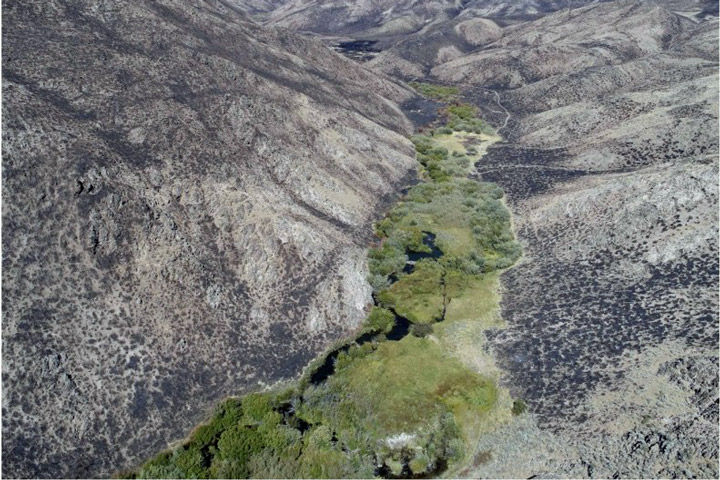
There is already so much to be read about the significance of beavers to the healthy functioning of the UK landscape. However, after a climate-anxiety inducing Summer, where drought and wildfire destroyed vast swathes of our countryside, I was reminded that we all need to be amplifying the potential benefits of reintroducing more of this species. Alongside many others, I was hit by the grief of all that we had lost and the reality in which my children and grandchild will have to live. Yet, two gems of hope shone gentle on my mind, both with beaver-dammed wetlands at the centre. The first, a photograph of an area in Idaho decimated by wildfires but with an ‘emerald refuge’ at its centre. Here, in 2018, many species had found a natural haven. The second, a photograph taken in East Devon during the drought of 2022 showing the vibrant green of a beaver created wetland amid the beige tinder-dry landscape which surrounded it. In this time of deep concern, we must campaign to #MakeBritainWetAgain and beavers can be part of the solution we need.
Nature’s Architects
Of course, beavers are completely indifferent to the benefits of their actions to their non-beaver neighbours like us. They’re just trying to do the best they can for themselves and their families. Historically, Eurasian beavers would have needed to protect themselves from predators such as foxes, lynx, wolves. They may be slow on land, but deeper water gives them the upper hand and allows them to escape into the underwater entrance of their lodge or one of their burrows. Thus, beavers evolved to reimagine the architecture of a landscape to meet their needs
Working at twilight they coppice nearby trees with their strong teeth and use the logs to dam shallow streams. It is the iron-coated enamel that accounts for the strength of these teeth. They are so strong and sharp that they were even used as woodworking tools by Neolithic and Iron Age people. The iron also explains their unusual orange colour. Once they have used these teeth to cut trees down to a manageable size they will bring them to where they are needed. To do this, they may also dig channels so that the heavy lifting of the wood is done by the water itself. Once in place, their dextrous front paws set about weaving the wood together with vegetation and mud to form their famous leaky dams. The first dam they build will be the natal dam, which offers protection to the lodge where they make their home. However, to manage the hydrology of the site they may build further dams upstream to slow the flow of water and, in times of heavy rain, they may create notches on either side of the dam to alleviate pressure.
Biodiversity Bringers
The effects of these dam building activities can totally transform the landscape as they make space for rivers to move in. Areas where rivers may once have been straightened are expanded into thriving wetlands. Behind the dam, a host of natural processes are restored as an assortment of habitats are created within and beside the river. C.S.Lewis’ Narnian Chronicles may well have perpetuated a myth that beavers eat fish (when they are in fact herbivorous), however he was well on the mark in portraying Mr and Mrs Beaver as offering hospitality and shelter. Take fish, for example; these new areas offer spaces for spawning and an increase in food. Other beaver beneficiaries include insects, amphibians, songbirds and bats. The vast improvements in biodiversity and bioabundance are not just due to the increase in water in the area. Deadwood offers shelter and food and the increase in light as the canopy is opened up enables the regeneration of plant, lichen and bryophyte species.
Meanwhile, the health of the river is also affected downstream. Studies show beaver dams filter out sediment and pollutants to improve water quality. This includes many urban pollutants such as lead and mercury as reported in a 2026 study from the US into stormwater management. No wonder some ecologists have referred to beaver landscapes as the Earth’s kidneys.
Flood Managers
But the benefits to life downstream don’t end with water quality. The wetlands that the beavers create regulates the flow of water helping to prevent flooding. In effect, they connect the river back to the floodplain, holding water upstream to benefit the land in time of drought and to slow the flow when it floods. Research has evidenced the positive impact of beavers to reduce peak flow on multiple sites from upper catchments dominated by forestry to those dominated by grasslands and agriculture. Beavers have even helped to stop the London Underground from flooding at West London’s Greenford station, thanks to the Ealing Beaver Project.
Beaver dams are so successful that humans have played beaver in their own communities to help prevent flooding in areas where beaver reintroductions have not yet been able to take place. The building of these leaky dams takes a huge effort by volunteers and/or contractors whose saws and muscles are no match for beaver incisors. Beaver dam analogues have also proved helpful when translocating beavers into areas which are not yet fully supportive of a beaver colony. Gone are the days of simply dropping beavers by parachute into any old place!
With the UK government estimating the cost of flooding averaging £2.3 billion a year, the reintroduction of beavers can offer a much-needed nature-based solution. And that’s just the economic cost. Ask anyone who lives in a flood prone area, and you will find out about the other immeasurable impacts. As a volunteer flood warden, I have seen lives and livelihoods devastated and, for some, an emotional impact that is revisited year on year, whenever there is heavy rainfall. The teeth of the beaver may not offer us the magical protection that they did in the amulets of our Anglo-Saxon ancestors, but their natural behaviour could keep us safe from the predicted increase in climate change related flooding.
Firefighters
Which all brings us back to where we started with those photos of an oasis of green surrounded by parched and burned earth and why we all should become beaver believers when climate change can test our faith in a liveable future.
The science on the resilience of beaver-dammed corridors during wildfires can be found in a paper by Emily Fairfax and Andrew Whittle and examines data from five large wildfires in the US. They found that the streams that they studied without beavers burned 3 times more intensely than those with beavers. We all know that water does not burn, but the water of a beaver wetland is not limited to just the ponds. It spreads out into the channels the beaver has created to access food and to transport wood. These reach out like veins throughout the area and irrigate the vegetation even during periods of drought, even those of up to 2 or 3 years, keeping the area lush and green and increasing its fire resistance. Happily, Professor Fairfax is also a dab hand at stop motion animation, which helps to spread the message in less than a minute to those who prefer something more visual.
The beaver area doesn’t just act as a firebreak in wildfires, it provides a refuge into which other wildlife and domestic livestock can retreat and a source of food whilst the rest of the landscape is in recovery. The dams also filter the ash and debris that run off in the aftermath. Large and accessible ponds can be also used to provide water to suppress smaller fires as they breakout, before they go wild.
Balls to the Beaver!
It is worth saying that it isn’t all plain sailing when it comes to beavers. Whilst I may be celebrating the huge transformational changes that they make there are others who have concerns about these very same changes. For some, they may just be resistant to difference. Our memories are short when it comes to how our landscapes should look. Beaver dammed areas are pretty messy and we all know how much resistance there can be to nature being messy rather than manicured. In such circumstances I would point towards the Aesop’s fable whose moral is that it is worth making a sacrifice to live a life free from danger. For those who are curious, this tale involves a beaver who, being hunted by dogs, leaves behind his testicles in the knowledge that these are what the hunter wanted for their magical medicinal properties. Here Aesop was misleading since it is the beavers’ anal glands which hold anti-inflammatory and analgesic castoreum, but his version certainly makes it a tale folk would be more likely to retell.
Beyond those who just don’t like the look of a beaver-dammed wet wood, there are those with legitimate concerns. Though beavers are known to be hard workers, they are their own bosses. Without enclosures, they will use their knowledge of the environment to decide the best places to sculpt their dams and lodges and pay no heed for the boundary lines on our OS maps. It would be unfair for an individual farmer to sacrifice their livelihood to keep the area safe from flooding were they to wake up to find that the beavers had decided to flood their field. Given the cost of fire and flood to the UK economy, such a sacrifice must instead be shared, with a clearly mapped out compensation scheme.
The short work that beavers can make of a tree can also raise concerns about significant trees upon a site or the ability of woodland to survive their onslaught. Eurasian Beavers co-evolved with our native riparian trees, these trees are designed to survive a coppicing and sustainable forestry is in the beavers’ best interests. We are, nonetheless, in a time when our ecosystems are out of balance so on occasion we may wish to protect certain trees. In such circumstances, a wire mesh tree protector will suffice. Concerns about the passage of fish upstream (when some fish species are under threat) can also be mitigated against by creating river buffers and side channels around dams. Meanwhile, the tendency of beavers to ‘fix’ culverts by filling them in can be addressed by installing grills. These are known as beaver deceivers in the US where beaver populations live closely alongside humans and our infrastructure.
A further key issue when it comes to beaver reintroductions is that, whilst they have been hunted to extinction in the UK so too have their main predators, wolves and lynx. These apex predators would naturally keep a successful beaver population in check. Without them, conflict might arise between a growing beaver population and their human neighbours. To address this, in areas where all mitigation strategies have been tried, the Beaver Trust has a successful beaver translocation strategy. They will sensitively trap and move beavers to more suitable parts of the UK. Here they can improve the genetic diversity of an existing colony or begin their own in an area hungry for all the nature-based services they provide.
Beavers Belong Here
Wherever there is a potential issue, it is worth finding a way around it; not only are beavers’ nature’s own fire crew, flood defence force and water management engineers, beavers also belong here. Archeologists have found hundreds of pieces of historical beaver wood from sites across Britain, from Somerset to East London and from Wales to Scotland. Alongside this, around 200 fossilised beaver remains have been uncovered, including this beaver skull dating back to between 840-410 BC. They can also be found in our cultural history: in poetry, in place names such as Beverley (meaning beaver’s stream) and sadly, in lists of payments being made for their heads.
It was in one such list from 1789 that the last record of beavers in England can be found. The last record in Scotland was around Loch Ness in the 1500s and in Wales the last record was in the 14th century poem, The Swan on Syfadden Lake by Dafydd ap Gwilym. By 2007, when the Oxford English Dictionary updated their children’s dictionary, alongside other nature-centric words, it was considered too irrelevant to include. It was discarded to make way for words like ‘database’ and ‘blog’.
But beavers have never been more relevant. They are no longer a museum exhibition to be mused over in the form of an old skull or Napoleon’s iconic hat. Instead, they are something to be marvelled at. They are our ecosystem engineers, our water purifiers, and our defenders. The words from the writings of another Welsh poet, ‘Vernon Watkins’ resonate for me during these times:
In a climate of fear and conflict,
A secret architect,
I carry the plans of the city.
I construct where hostile conditions hold others in bondage.
I fell, and measure to usage,
Turning the course of the river,
Dragging logs of my labour
To uphold the measure of life.
Our blog posts are written by our core team and guest bloggers. If you have an idea for a blog post please pitch it to us: info@wildcard.land
CAMPAIGNS
ARCHIVES
- October 2026
- September 2026
- August 2026
- July 2026
- June 2026
- May 2026
- April 2026
- March 2026
- February 2026
- December 2025
- November 2025
- October 2025
- September 2025
- August 2025
- July 2025
- June 2025
- May 2025
- April 2025
- March 2025
- February 2025
- December 2024
- November 2024
- October 2024
- September 2024
- August 2024
- July 2024
- June 2024
- March 2024
- February 2024
- January 2024
- December 2023
- November 2023
- August 2023
- July 2023
- May 2023
- February 2023
- January 2023