
Rewilding Species of the Month: The White Stork
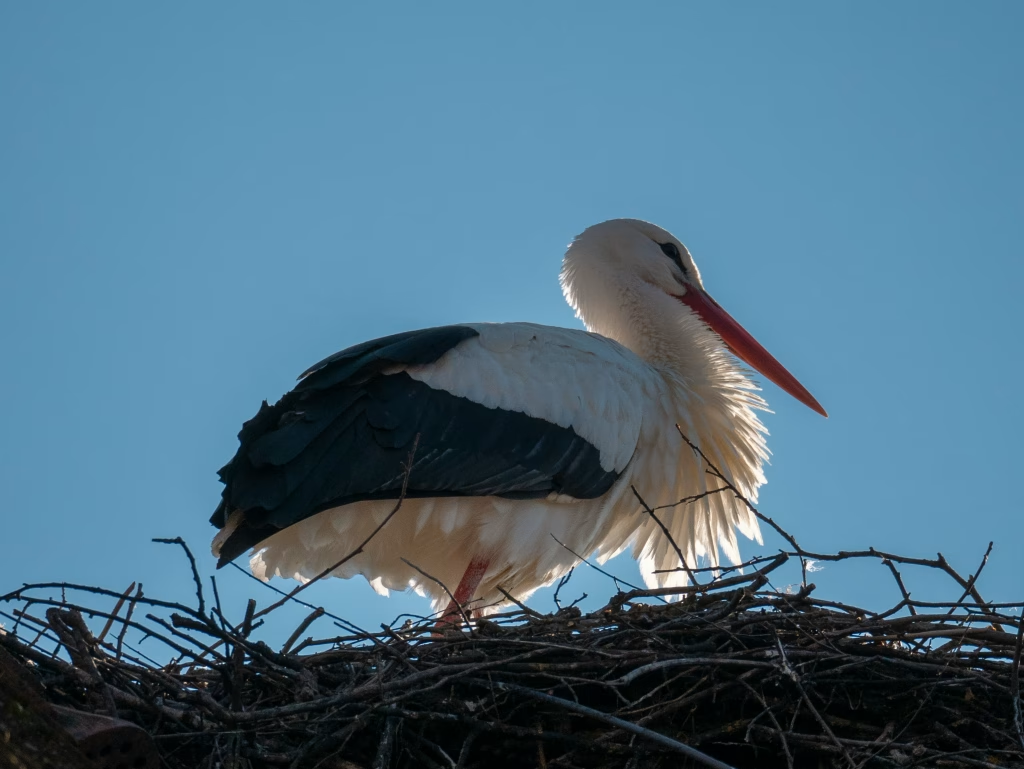
Our rewilding species this month, the White Stork, is a brilliant ambassador for species reintroduction. This beautiful bird is large enough to spot without the need for binoculars as it stands proudly on one bright red leg or congregates with others to draw graceful circles in the skies. It is a friendly species, happy to build a nest alongside its fellow storks and alongside humans too, as we all find our spot in the natural world. Though they may not have the vocal prowess of other bird species, their contented click clacking brings joy and reconnects us to our wild past.
The Legendary Baby Bringers
White Storks were once widely distributed throughout the British Isles. Since they were not hidden away in the wildest of places, but co-existed with human communities, they became engrained in our cultural traditions. This is particularly the case with imagery surrounding birth. Fans of the old Disney films may already be humming Look Out for Mr Stork to themselves as they recall the storks delivering all the baby animals in Dumbo. And, if you check out the new baby section of greeting cards in your local newsagent, chances are you will find a white stork proudly standing with a bundle of baby in its beak. Such folklore is deeply embedded in human experience of migration. Without understanding the reason why, people would see the storks disappearing in late Summer, not long after the traditional marriage period, only to coincidentally return the next year just at the time when honeymoon babies began to be birthed. This led to the idea that the storks brought the babies back with them.
The Mysteries of Migration
Ideas varied on where the storks had been during their time away and where they picked up the babies. Some thought they travelled to the moon, others to the bottom of the sea. In Germany, the tradition was that they visited marshes and caves where the spirits of unborn children lived in the form of Adeborsteine (or stork-stones). It was in Germany, however, that more tangible evidence of what really happens came to light.
Whilst some wonderful stories abounded across the world on the explanation for the annual disappearance of different bird species, the return of one stork to Mecklenburg Germany in 1822 dramatically changed our understanding. The thing which really set this bird apart from the rest was the 30-inch spear that was sticking out of its neck. When a German hunter shot the bird down and killed it, it became evident that he had not been the first to have a go. An examination of the spear at the University of Rostock concluded that the original effort had been at the hands of an African hunter. Together with remnants of arrow heads in other birds, the Pfeilstorch (now a taxidermy exhibit at the University) was a clear clue that Storks did not search for unborn souls or fly to the moon but, instead, spent their gap years in warmer climes.
Insurgent Storks
But while the Germans were being schooled in ornithology by their stork neighbours, the United Kingdom had completely lost these lovely birds. The last official record of a breeding pair in the UK were of a pair nesting on the roof of St Giles Cathedral, Edinburgh all the way back in 1416. However there continues to be historical evidence surviving beyond this for a while, in art and on dinner menus, until their eventual eradication. As usual, the key cause of their disappearance was a loss of habitat together with over-hunting. However, the storks were also persecuted during the English civil war for a remarkable reason. Unlike in the rest of Europe, where they were viewed as a symbol of good luck, the stork had become synonymous with freedom and revolution. Isabella Tree, in an article in the Guardian shares the fantastic fact that “Shortly after the restoration of King Charles II in 1660, with storks rare but clinging on, parliament debated putting greater effort into expunging them from the east of England for fear they might foment republicanism.”
So it was that, as a child, my only experience of storks in the UK was on the packaging of margarine. The idea of such a large, long-legged, long-beaked bird stalking the streets of Greater Manchester was utterly fantastical. However, in the past few years storks have been spotted hanging out around Oldham as well as in various other places from Northern Ireland to Northumberland thanks to the wonderful work of the White Stork Project down in the South East
Return of the Stork
The return of storks to the British Isles demanded more than just habitat restoration. A stork might look down upon the most divine stork haven possible and still just fly right past rather than set up home. Storks might be opportunists when it comes to their diet (they’ll eat all sorts, from a ladybird to a lizard) but, when it comes to their nests, they need the sense of belonging that comes from being born in that spot (or at least, having a breeding partner who was born there). This is a characteristic known as natal philopatry and it’s the reason why species reintroduction is incredibly important, even for a species that we might occasionally see flying over. The White Stork project therefore set about putting together a crack team of organisations to bring the storks back to where they belong. With an ambition to establish 50 breeding pairs in England by 2030, this team combines expertise and care with being able to allocate the right places and bring the right storks there.
One place where White Storks truly belong is West Sussex, as evidenced in place names like Storrington (meaning village of the storks). Sussex is also close to the migratory route to Europe and Africa. The Knepp estate, in both its location and its commitment to connection with our wilder past, was therefore the perfect place to begin the project. The right storks to introduce were a group of injured Polish birds who, whilst otherwise fit and healthy, had lost the ability to fly. After rehabilitation at Warsaw Zoo and the Cotswold Wildlife Park, the birds were brought to an open pen in the heart of Knepp where they could lead a happy life, attract wild birds from overhead, and build nests without having the option to fly back to their beloved Poland. Ultimately the hope was that these birds might birth baby storks that could fly off to the African sunshine but who would forever call Knepp home and would return there when ready to breed.
Reconnecting Us
Success for the storks happened, serendipitously, at a time when people were searching for signs of hope. Though the White Stork Project had begun its work back in 2016, it was during the Covid lockdown of Spring 2020 that the first stork chicks hatched at Knepp. Each year following has demonstrated increasing success and, with all the storks tagged, they can even track where they have gone and, excitingly their return with partners of their own.
Human connection with our reintroduced storks has also increased in that time. These charismatic creatures have gained thousands of followers over the past few years, including myself. Though I am miles away from Sussex, all it takes is a click of a tab and I’m on YouTube accessing the White Stork Project’s live cam feed. Right now, Bartok and his latest female are standing on their nest, wind ruffling their feathers as they survey the landscape. I am excited that, later in the year, I may get to see their offspring feeding and eventually fledging. Scrolling through the comments will also keep me updated on what the storks have been up to while I have been offline, (as well as providing more information to those studying the storks’ behaviour).
Collaborating for hope
Back in the outside world, the project also has scores of volunteers who work in the field to monitor the storks and all the different nests on site at Knepp. Others are actively involved in reporting sightings of the storks elsewhere in the country. The incredible work by volunteers and the staff involved in the White Stork Project has helped to create a detailed picture of stork behaviour and needs, enabling expansion of stork reintroductions elsewhere in the UK.
The data is also shared with projects in other parts of the world too, including through the European Stork Villages Network. Together, stork enthusiasts are helping to reverse the global decline in White Stork populations so that they are no longer the near-threatened species they were 40 years ago.
Storks in the City
As mentioned above, storks do not need a complete wilderness to survive. They are social creatures who will happily live alongside humans. In areas across Europe, residents are serenaded by the rhythmic clattering of their bills. Their morning walk to the office may be punctuated by a moment of peace as they notice one or more large white birds gliding above them. It is therefore thrilling that, following on from the Sussex success stories, London has set its site on reintroductions. With work having been carried out to restore and expand wetland habitat by Rewilding East London, there are foraging opportunities aplenty, providing prime real estate for a new population of White Storks. Later this year, chicks will be released to a purpose-built aviary. This is an important step towards returning to London the nature that it has lost and returning Londoners to a stronger relationship with the natural world.
Storks in our Landscape
For those of us elsewhere in the UK, the White Stork revival is not restricted to the South East of England. There’s been a project in North Staffordshire which welcomed chicks last May thanks to the work of Celtic Rewilding and each reintroduction programme moves the storks closer to our doorsteps and leaves us more likely to see them flying above our own cities and villages.
Wherever White Storks inhabit will be good news for the natural world. Species reintroductions restore to nature a service that these lost species would once have provided. When it comes to storks, there are two key roles at play. The first is that they shape the landscape through predation ensuring that, as we rewild, no one species takes over. For example, though we might wild our wetlands to become the perfect place for amphibians, storks will help to maintain a balance to avoid a biblical plague of frogs. As opportunistic feeders, they will tend to prey on whichever species is the more dominant and therefore more available, this helps to keep everything in balance.
Sharing their homes
The second impact of the White Stork is that it helps create habitats for other species. As storks usually return to the same nest year on year, they engage in some home improvements. This does not stop at a Spring Clean but also involves expansion, with nests reaching sizes as large as 3 metres in both diameter and depth. Through such expansion, storks inadvertently create granny flats for other birds, most commonly sparrows, who make their home at the bottom of the stork nests.
White Storks help other bird species stay well fed too. Everyone knows how messy your home can get when you’ve got little ones, but storks take this to a whole new level. Rather than feeding stork chicks directly, parent storks lovingly regurgitate food into the centre of the nest, allowing the chicks to help themselves. Mix this in with the chicks’ excretion and you’re left with an incredible habitat for invertebrates such as maggots and beetles. And whilst the existence of more maggots and beetles may not thrill you, they are essential food for our native birds.
Bringing Us New Life
The presence of storks in the landscape has an effect which goes far deeper than this though. These striking birds are hard to miss and will get folk talking. It is through such conversations that people begin to consider all that we have lost and the reasons why. Wild Storks therefore become ambassadors for other species too. They give people a new insight into the wildlife and wild spaces that have so often been taken for granted. Through this shift, they can become more open to understanding that our landscapes and species need to be restored. In short, White Storks help us to rewild ourselves, transforming our relationship to nature. Though they may not bring us babies, they can certainly help us find new life in one of the most nature depleted countries on the planet.
Our blog posts are written by our core team and guest bloggers. If you have an idea for a blog post please pitch it to us: info@wildcard.land
CAMPAIGNS
ARCHIVES
- October 2026
- September 2026
- August 2026
- July 2026
- June 2026
- May 2026
- April 2026
- March 2026
- February 2026
- December 2025
- November 2025
- October 2025
- September 2025
- August 2025
- July 2025
- June 2025
- May 2025
- April 2025
- March 2025
- February 2025
- December 2024
- November 2024
- October 2024
- September 2024
- August 2024
- July 2024
- June 2024
- March 2024
- February 2024
- January 2024
- December 2023
- November 2023
- August 2023
- July 2023
- May 2023
- February 2023
- January 2023