
Rewilding Species of the Month: The Mountain Hare
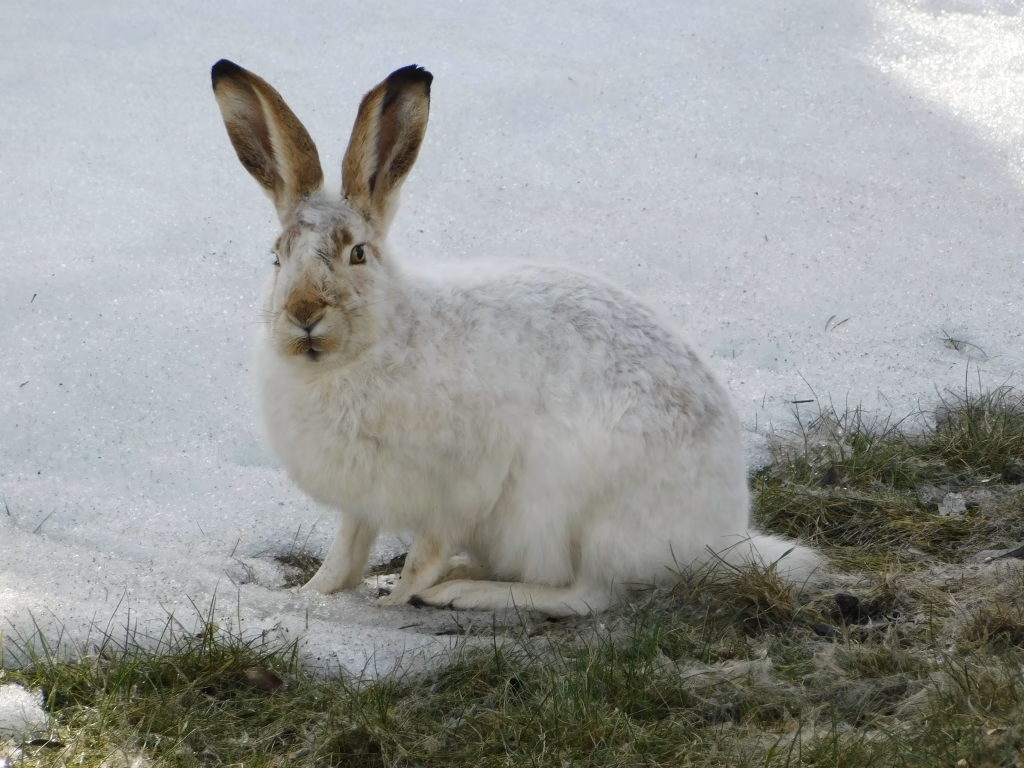
Some species play a key role in rewilding: altering landscapes, restoring ecosystems and/or creating balance through predation. This month, however, we focus on a species for whom rewilding could be the key to their survival on our shores – the mountain hare.
The mountain hare is the UK’s only native hare and has been here since the last Ice Age. It is also the UK’s only true alpine mammal having evolved perfectly to adapt to the cold. It is a hardy species, combining an adaptable diet, camouflage, and speed for its survival. However, as our planet warms, it has become just one of the indicators of how humanity’s influence disrupts the ability of other species to survive.
WINTER WONDERS
The mountain hare is one of very few UK mammals able to gain weight during the winter. Unlike humans, who gain weight through mince pies and Christmas Chocolates, hares are able to feed upon hardy plants such as the woody heather that remains on our moorlands during the wintertime. This sets the hare apart from their rabbit and brown hare cousins whose diets are less generalised.
A further adaptation enabling them to thrive is their thick white winter coats. Mountain hares do not burrow underground to stay warm, instead they find sheltered spots called forms to protect themselves from harsh winds but their fur also adds to their ability to survive in the cold. When at rest, they will ball up and fluff up their fur for added insulation. In fact, the mountain hare’s think winter coat is an important element of adaptation and enables it to keep its body temperature stable in conditions as low as minus 30 degrees!
Their coats also become white in the winter affording them protection from predators as they blend in with the snowy landscape. They are also clever enough to rest on uneven ground so that they don’t cast a shadow. This can make things difficult for wildlife photographers too, though patience and tapping into local knowledge pays off for those wanting to capture these charismatic creatures.
SNOW HARES WITHOUT SNOW
For a while, people thought that the mountain hare gained its white coat from eating snow. We now know that the change is triggered by the shortening days and drop in temperature. Unfortunately, whilst this time should sync with snowfall, climatic changes are making our seasons less predictable leaving mountain hares vulnerable.
99% of the UK’s mountain hares are to be found in Scotland which has seen a worrying loss in snow cover over the past 50 years. This is strikingly visualised in an article from The Ferret which shows the reduction in areas experiencing more than 10 days of snow cover a year. As you can imagine, things are even worse in their last remaining habitat in England, the Peak District, where mountain hare populations are at risk of collapse.
The implications of these weather changes are multi-faceted. The most obvious is that a white hare will stand out on a background devoid of snow. Whilst this may help photographers, it also helps predators, such as Golden Eagles and foxes, who can more easily pick them off.
DRY HARE
The hares’ ability to find food is affected too. Climatic change has led to far more instances of thaw and freeze creating an impenetrable barrier for foraging heather. Meanwhile, the drier Summers have caused dehydration in lactating female hares making it much harder for them to feed their leverets. A further risk has been the increase in wildfires in our uplands, especially in the Peak District, which hosts the only remaining mountain hare population in England.
The Peak District also faces the risk of increased competition with neighbouring brown hares as they expand their range into areas that had previously been inhospitable to them. This is a pattern that has already been seen in both Sweden and Ireland.
Overall, climate change has led mountain hares to move northward or to higher levels, isolating communities and putting them at additional risk as they begin to lose genetic diversity. Whilst mountain hares may continue to survive globally, in the UK, where their current conservation status is near threatened, we are at risk of losing them entirely.
PROTECTING OUR HARES
For some years, Mountain Hares have been listed as a priority species in the UK Biodiversity Action Plan. This has led to some legal protections, especially in Scotland which, in 2021, granted them full protection under the Wildlife and Countryside Act. Down in England, whilst mountain hares can no longer be hunted, culling still takes places as part of grouse moor management. It’s been argued by some that grouse moor management nevertheless benefits the mountain hare population on the basis that burning creates a more suitable heather habitat for them. This is not born out by the evidence. A 2025 study in the Peak District demonstrated that the largest decline in mountain hare populations were on grouse moors.
HOPE IN REWILDING
Hope for the hare was also demonstrated in this same study since the highest densities of hares were to be found on restored blanket bog. Whilst human action has done much to deplete mountain hare populations, our actions now to rewild our uplands could offer them a lifeline.
It stands to reason that healthy blanket bogs would provide a more sustainable habitat for mountain hares in the current climate. For a start they hold more water, reducing the chance of the hares dehydrating during periods of drought. Restored blanket bogs also reduces the risk of wildfires. Wildfires have proved lethal for mountain hares which have been observed lying dormant, not knowing how to escape when they are caught in them.
Rewilding our uplands into intact blanket bog also creates a more varied and sustainable diet for mountain hares, with a greater range of plants existing where heather might otherwise dominate. The undulating landscape and more varied landscape also creates more opportunities to find cover to shelter and to find protection from predators.
A PART OF OUR CULTURE
Mountain Hares are elusive creatures – even their Latin name, lepus timidus, indicates their shyness – yet they are well loved. YouTube is populated by videos of photographers in search of the iconic species and the presence of mountain hares creates opportunities for ecotourism.
Whilst populations dwindle and the wild landscape suitable for them shrinks year on year, the mountain hare continues to occupy a healthy space in our cultural landscape. References to white hares as well as hares on the mountain abound in our folk songs. There’s even a spotify playlist of hare related tunes (though admittedly the mountain hare is once again in competition with the brown hare on this).
Our folklore is also rich with references. As the UK’s fastest land mammal and with the ability to hide itself well in the shelter of its form, hares would seem to appear from nowhere and disappear just as quickly. The sudden presence of a hare at twilight in wild deserted places or by faery hills led to their association with witchcraft. Some folk traditions held that they were witches’ familiars, others that they were witches themselves who were able to shapeshift. Some folk would even avoid uttering the hare’s name for fear of being cursed, leading to some brilliant pseudonyms such as the sudden start or the skidaddler.
the hare’s curse
Unfortunately, it is our actions that have cursed the hare rather than the other way around. Even when the hunting of hare was banned, shooting, culling and snaring continued in rural culture. But it is our industrialised culture which is now putting them most at risk through climate change.
If we value these species, we don’t need magic or witchcraft to make it right. We need a more concerted effort to address climate change and to rewild the habitats in which mountain hares thrive.
Our blog posts are written by our core team and guest bloggers. If you have an idea for a blog post please pitch it to us: info@wildcard.land
CAMPAIGNS
ARCHIVES
- September 2026
- August 2026
- July 2026
- June 2026
- May 2026
- April 2026
- March 2026
- February 2026
- December 2025
- November 2025
- October 2025
- September 2025
- August 2025
- July 2025
- June 2025
- May 2025
- April 2025
- March 2025
- February 2025
- December 2024
- November 2024
- October 2024
- September 2024
- August 2024
- July 2024
- June 2024
- March 2024
- February 2024
- January 2024
- December 2023
- November 2023
- August 2023
- July 2023
- May 2023
- February 2023
- January 2023